The band So Lucid Electric Feel has released its second album

Contemporary psychedelic blues rock band So Lucid Electric Feel has released its second album Social Mindscream.

As the title of the new longplayer suggests, the album conjures up scenes in which a mind hungry for love and society manifests itself in different ways and characteristics.

“The album includes both sides – fantasy and reality, without giving up the opportunity to create your own artistic signature,” says the band’s vocalist and guitarist Uvis Gailis. “The story of the pieces winds through the labyrinths of motivation and routine, yet it is able to reproduce several emotions. Our songs give free rein to everyone’s imagination and provide the opportunity to find multiple identities.”

The album was made in Siguldas Skaņu Studija in cooperation with Latvian Blues Band bassist Mārcis Kalniņš, who is also the sound engineer of the new musical material, as well as the creator of the final mix and master version.

So Lucid Electric Feel is a trio founded in Sigulda, Latvia, in 2015, in which vocalist and guitarist Uvis Gailis, bassist Kristaps Sproģis and drummer Raitis Kalniņš have combined their musical skills. A couple of years ago, the band released their debut album We’re All Connected.

The new album Social Mindscream can be heard on major music streaming platforms.

Album in YouTube

Latvian music record award to accompany physical trophies with custom NFTs

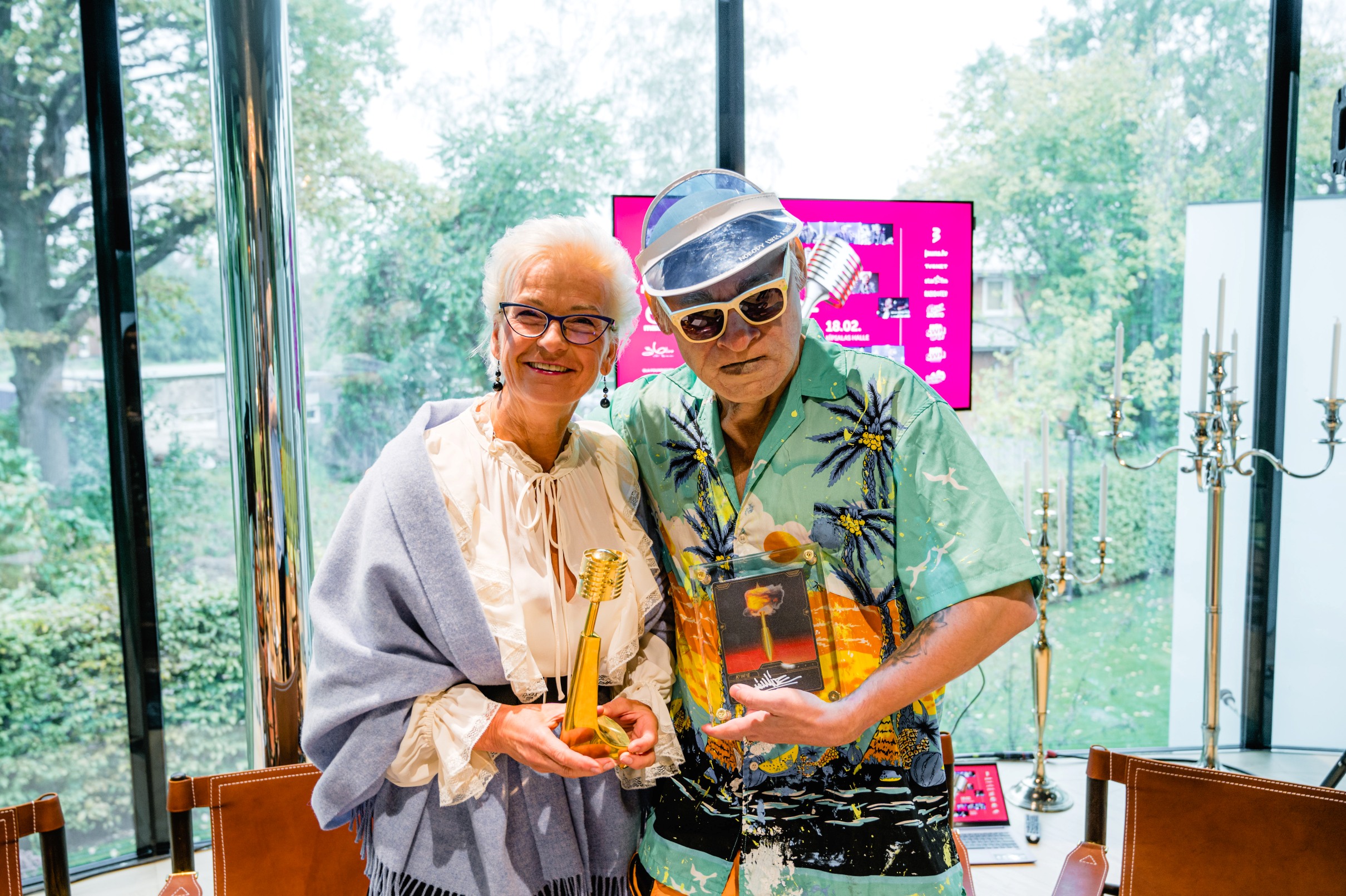
The annual Latvian music record award “Zelta Mikrofons’ 23” take place on February 18, 2023 at the Ķīpsala International Exhibition Center, Rīga. The winner of each category receives two prizes – physical statuette and digital NFT, designed by world known Latvian artist KIWIE.

“Zelta Mikrofons” is one of the oldest and most important awards of Latvian music industry, summing up the excellence of Latvian music industry for 27 years. The past years the ceremony was broadcasted in TV channel TV3. For the first time at “Zelta Mikrofons’ 23” the audience will have a chance to celebrate with the musicians and enjoy the red carpet event. A limited number of tickets are available to the ceremony.

Latvian artist KIWIE is best known for the colorful street art, design and his secret, witty “grand dad” identity. KIWIE gained international recognition for his “Fat Monster” graffities. He comments on the collaboration with “Zelta Mikrofons”: “The time is changing and so does “Zelta Mikrofons ”. It might be the first time in Europe and even the world when a music award will gratify the winners with two prizes. One is the traditional physical statuette the other one – NFT that certifies the ownership of the microphone by the particular prize winner. Each nomination’s NFT will look slightly different, based on the specific style of the nomination. ”

“Zelta Mikrofons 23 ” will open a nomination for the most streamed Latvian recording in 2022. The data collection will be provided by “Ranger computers” (UK) and supported by Association of Latvian Sound Recording Producers, Publishers and Distributors (LaMPA), Association of Latvian Performers and Producers (LaIPA). The nomination will be represented by the brand Elektrum.

More information: http://www.zeltamikrofons.lv/

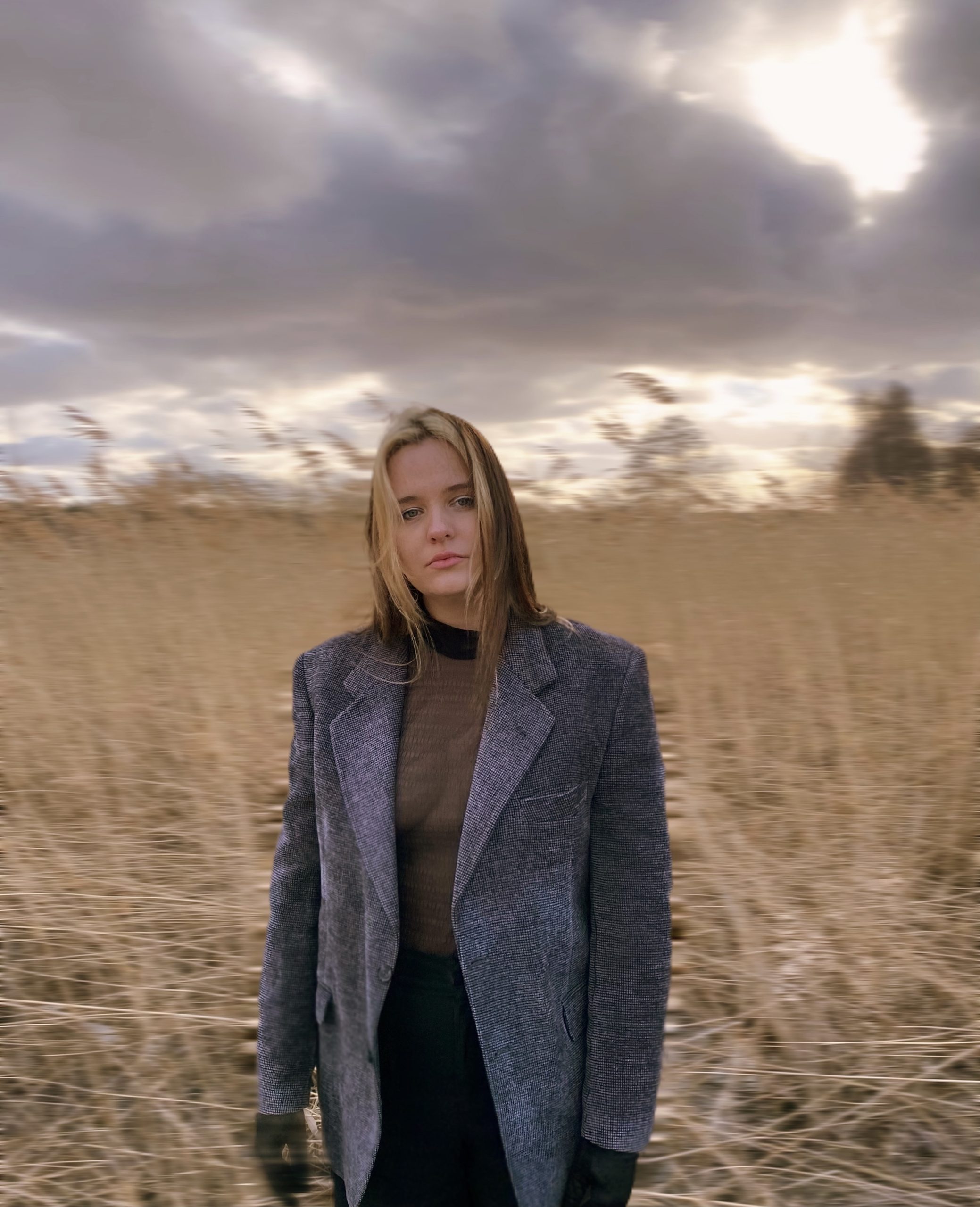
Latvian artist MAASA releases her debut single “Vilcienos”

MAASA or Paula Kristiana Pētersone, releases her new song “Vilcienos”, which is the first single from the artist’s upcoming EP.

“Riga – Melluži is a train route that I have traveled countless times. In winters, summers, mornings and evenings. And, both at the age of ten and in adulthood, whatever the circumstances and weather, I was always greeted at the end by the lights of my grandfather’s car. Until last October, when the lights went out. I put this pain and bittersweet feeling into the song and together with producer Edvards Broders we added more audial layers to it. I hope that the song will be like a warm and nostalgic hug in these times when there is so much sadness and beauty in this world at the same time”, says MAASA.

The recording and post-production of the song was done in cooperation with producer and sound engineer Edvards Broders. Drummer Artūrs Strautmanis also participated in the song recording.

The video of the song was filmed in the yard of the singer’s grandparents’ house in Melluži. “Vilcienos” is available on all major music streaming platforms.

Paula Pētersone works as a creative copywriter, and also participates in various creative projects, last year making her debut as a director of the music video for the song “Getting Dark” by the group “The Coco’nuts”.

Singer Keitija Bārbale releases the first single ‘Čau, kakao’ announcing her upcoming debut album

Keitija Bārbale have just released her first single ‘Čau, kakao’ and it is available on all streaming platforms, opening her debut album, which is going to be released September 2022.

20 year old singer-songwriter Keitija Bārbale is an upcoming artist from Latvia, surprising listeners with her depth of lyrics and unique songwriting style. A mix between modern music, grunge and pop, her music attracts a variety of listeners while maintaining her Latvian identity and sound. Powerful live performances and stage presence, strong values and a sense of justice – Keitija Bārbale’s straight-forward attitude, personality and songs leave no one indifferent.

Announcing her first single, the singer-songwriter, who doesn’t want to be pretentious, adds cryptically: “Romance never dies, just like bad pick-up lines…”

The upcoming debut album will present several songs composed by Keitija, the performance of which has been chosen in a seemingly minimalistic, but most accurately reflecting the essence of the work style containing only guitar and voice. The acoustically intimate debut recording was made in Liepāja, in the “Wiktorija” culture house, where the songs were recorded live and then mastered by producer Mārtiņš Krastiņš. The album release process is managed by the agency MOO/music observation organization.

Elizabete Balčus to release a full-length celebrating the body, its place in the universe, as well as the universe found within its fleshy walls!

On August 16th, 2022, the classical and jazz-trained flautist and electronica artist unveils via Mothland a pop noir number titled: “Narcissism Purgatory“, which serves as a conduit to the furthest depths of the artist’s psyche.

The followup to title-track “Hotel Universe”, softly released last June, is laced with what seems to be infinite layers of polyrhythms, flutes, synthesizers, dichotomous pleads as well as samples from unknown origins.

Last but not least, the song also features an inspired percussive contribution from English comedian James Acaster, who provides a lift through intricate drumming.

he song came to me after a festival. I had a panic attack there and a Ukrainian model was trying to calm me down. A week later, I went to a salon for a massage and had flashbacks from that festival, which led to me thinking that the therapist was carrying out some kind of exorcism or mummification ritual on me.

I wanted the song to be a reliving of the experience I had so I invited Ukrainian model Olya Yakusheva who was with me at the time to add vocals to the track. I mostly work with electronics but on this occasion I wanted some live drums in there as there’s a wild feel to the song. So I asked James Acaster, a comedian from the U.K., who happily agreed.

– Elizabete Balčus

Podruga releases the first single and video from the upcoming album

Alternative pop band Podruga has just released the single “Don’t Let Me Down” from their upcoming album “Sextasy” coming out in September. 

The melancholic dance track is inspired by the 90’s indie electronica. Airy and liberating, it makes you tempted to follow the White Rabbit and find your own Wonderland. The first draft of the song was written by the band’s vocalist Alise, when she took all of her music equipment and went to a music writing camp in Lithuania all by herself, instinctively recording the feelings of the moment. “Then I realized I’m chasing my own White Rabbit and trusting it to lead me to a better place,” says Alise. 

The music video follows Alise’s journey to a kinky Wonderland. It features some of the brightest names in today’s Latvian art world, such as performance artist Evelīna Baha, audiovisual artist Marss The Person, and drag queen Vencheska Baltique. 

The single was recorded and produced by Edvards Broders (“The Bad Tones”) at the “Red House” studio in Riga, and mastered by Alberts Levics (“The Bad Tones”). 

“Podruga” is: Alise Stefanoviča (vocals, keyboards, flute), Ričards Dauksts (guitar, keyboards), Jana Petkus (bass guitar) and Kārlis Lazdovskis (drums). The band was formed in 2016. So far, Podruga has released five singles and EP “YPA!”, which was highly acclaimed by the Polish radio station Radio Centrum.

Rock trio B OPTIMIST release their second single „Mēles”

On June 10, rock trio B OPTIMIST release their second single „Mēles” from their upcoming fifth studio album which is set to be released this autumn. A music video for „Mēles” is also out now.

This time the music is based more on electronic sounds, with a light, nostalgic summer feeling. „Our longest conversations started with – I’m going to sleep” – this song is about carefree moments and great unplanned adventures.

Song in Spotify

Music and lyrics: B OPTIMIST. Video: B OPTIMIST. Special thanks to Velta Liepa, Laura Ozola, Jānis Grosbahs, Toms Bahs un Signe Rusiņa. The song is available on music streaming platforms from June 10.

B OPTIMIST will perform this summer:

July 9 – „Fontaine GypsyCamp”, Liepāja

July 30 – festival Summer Sound”, Liepāja

August 5 – festival „Bauska TASTE”, Bauska

August 13 – festival „LIMBIZKVĪTS 3”, Limbaži

In April B OPTIMIST released the first single „Akvareļos” from their upcoming fifth studio album. Previously B OPTMIST have released their album “Visur skan”, an acoustic album “Turpinies!” with Latvian folk song lyrics. The debut album “B OPTIMIST” was released seven years ago. It was then followed by the EP “KOPĀ”. B OPTIMIST – energetic and emotional rock music in Latvian since 2013. B OPTIMIST is Valters Levins, Roberts Levins, Linards Liepa. Their music is available on Spotify, Bandcamp, iTunes, Youtube, etc.

Osokins’ Freedom Festvial for Ukraine took place in Riga from May 25 until June 8. As a reaction to Russias military aggression, this years festival was dedicated to Ukraine. Almost 80 musicians and actors well-known both in Latvia and globally came together to perform nine concerts at five different venues: the Black Heads House (Melngalvju nams), Hanzas perons, Piano salon @152, Ola Foundation and the Anglican Church. During the festival over 20 000 EUR were collected from ticket revenues and donations for Ukraine’s support.

During the festival many Ukrainian musicians and actors – war refugees, who were forced to leave their country because of Russian military aggression, had the opportunity to perform on stage in collaboration with a multitude of leading Latvian artists and get involved in the cultural life of Latvia. One of the goals of the festival was to enable Ukrainian artists to continue pursuing their profession, so that cooperations born during this time may develop and enrich Latvian and European culture.

It was symbolical that the opening act of the festival on May 25 was performed by Anna Nimayer an actress from Mariupol’s Drama Theatre – a place known all over the world because of cynical shelling by Russian military, despite knowing that hundreds of people from Mariupol including many children had sought asylum there. After the performance Anna Nimayer revealed that now she has no theatre, no home, which was also destroyed by military, and no city and that she is grateful to have the opportunity to express her feelings on stage which was immensely important for her and the audience in the hall.

The program of each concert included music by Ukrainian composers as well as Ukrainian folk music and poetry to popularize Ukrainian culture in Latvia and to invite audience to explore deep roots and colorful culture of Ukraine. More than 100 free invitations to the concerts were given to refugees from Ukraine currently living in Latvia. In cooperation with Viche, the confederation of associations of Ukrainians living in Latvia, special minivans were placed at the venues of the biggest festival concerts providing the opportunity to donate the necessary things and items to Ukrainians. All donated goods will be delivered to Ukraine.

The highlight of the festival was the closing Gala concert that took place on June 8 at Hanzas perons, where 50 Latvian and Ukrainian musicians and actors performed together on one stage in front of 600 spectators including the president of Latvia Egils Levits, Minister for Culture Nauris Puntulis, Deputy Chairman at Riga City Council and Ambassadors of Ukraine, Poland, United Kingdom, Estonia and Lithuania, as well as Deputy Chief of Mission of United States Embassy in Latvia. The final performance was the song “Resistance” by the united artists of “Latvia for Ukraine”. The concert ended with standing ovations.

Until Wednesday, June 15, it is possible to contribute to the donations on the Ziedot.lv website https://www.ziedot.lv/osokina-brivibas-festivals-ukrainai-4251.


On June 26, a special night concert by musicians Igo and Katrina Gupalo will take place at the St. Savior’s Anglican Church in the Old Town of Riga which will also be dedicated to Ukraine’s support. Tickets can be purchased here https://www.bilesuparadize.lv/lv/event/118141.

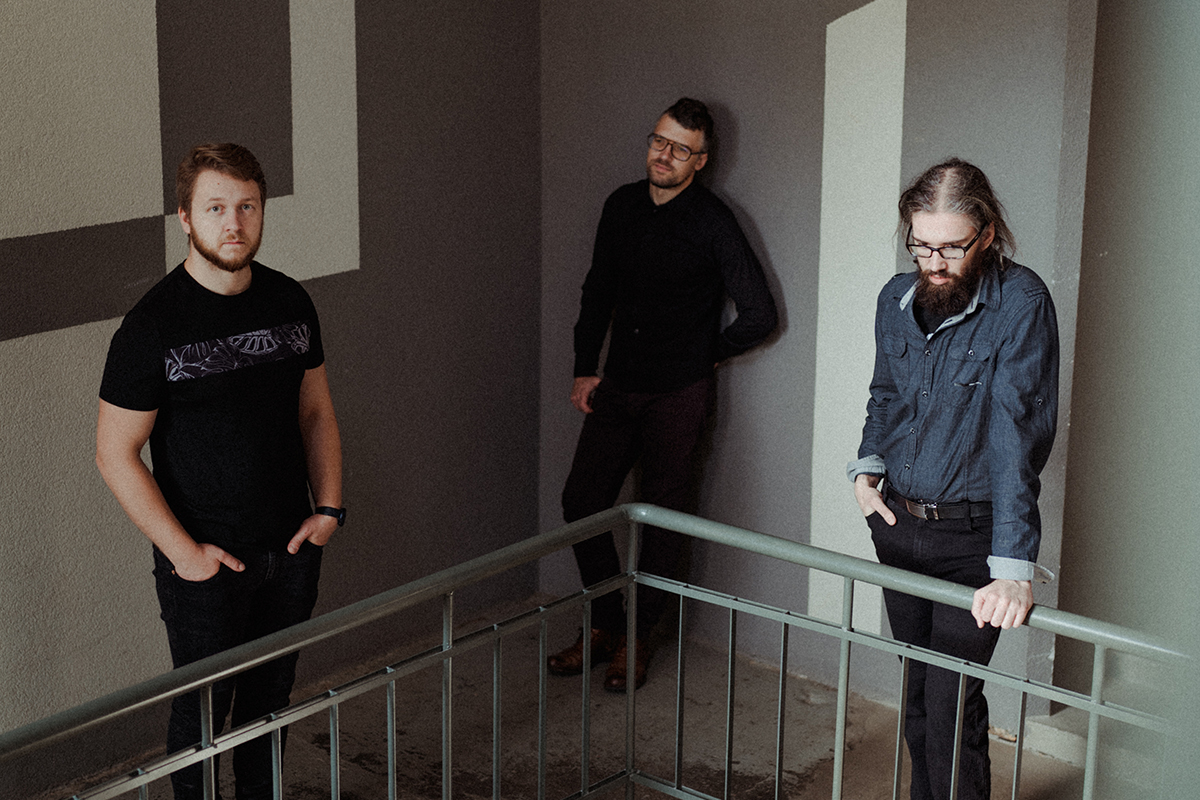
 

Mothland is thrilled to announce the signing of Latvian artist Elizabete Balčus

The neo-psychedelic dream pop artist releases new single and music video “Hotel Univers” out June 16th, 2022 via Mothland!

Coming up with bold, new ideas is something the classical and jazz-trained flautist Elizabete Balcus has never been short of.

Elizabete Balčus‘ dream-pop delight of a debut album was performed live with edible instruments, a prosthetic leg turned into a synth as she wore homemade costumes that Dali would likely have been proud to have stashed around his house.

On new release “Hotel Universe“, she continues to embrace the surreal.

Balčus‘ reverb-y Björk-esque vocal, orchestral flute arrangements, and slew of synths and drum machines serve as the palette from which she draws her dreams.

The song was recorded and produced by Elizabete Balčus before being mixed in a studio with Silvestrs Zemgals. The final touch came from vintage mastering specialist Henryk Lipp. The Grammy nominated producer added the final shine and sparkle by running it through lots of cool valves and vintage gear.

Of the track, the road-worn Balčus, who spent much of the last few years staying in hotels on tour in Europe, East Asia and Western Canada, says:

“I dreamt of a hotel in a retro-futuristic place in a parallel universe, where everything is one and everything is interconnected. Later, every time I was in the process of creating, I was consciously putting myself back in that dream. It’s like meditation, being in a dreamlike state.”

The result is a captivating, dynamic arrangement, which eschews conventional pop structure and reflects the exhilarating extremes our mind can take us to.

Gidon Kremer. Kremerata Baltica. “ppp”

In honor of the 25th anniversary of “Kremerata Baltica” chamber orchestra, SKANi releases an album by the orchestra led by Gidon Kremer called “ppp”. The name contains abbreviations of the surnames of the three prominent Latvian composers Pēteris Plakidis, Kristaps Pētersons and Georgs Pelēcis. The subtlety of chamber music and the love towards detail by Pēteris Plakidis, mathematical precision and composure along with transcendent and mystical images by Kristaps Pētersons and naive, cheerful, brave characters alongside a melancholic reverie by Georgs Pelēcis make this release a bright example of the Latvian contemporary music. The album (CD, streaming and download format) will be released on June 17, 2022.

“My ideal is to serve music. In whatever form that may be, I take great joy in being a servant to this lady”

Pēteris Plakidis

Pēteris Plakidis (1947–2017) is the greatest poet and interpreter of music among Latvian composers. According to his biography, he was also the “most academic”, because once he began his studies at the Jāzeps Vītols Latvian Academy of Music, he never left the school. Studies in composition were followed by an assistantship and then a professorship. He also had the most typical path of a Latvian composer regarding education and career: the Emīls Dārziņš Music School, the conservatory, head of the music department at the Latvian National Theatre, a popular composer of film music, also a co-creator of wonderful animated films. He embodied the bonds of artistic fraternity between composer and performer, between members of a chamber ensemble, between poetry and music, between poets and musicians. These bonds were stronger than any external conditions; Plakidis belonged to an age of musical “insiders” where only talent and insight mattered. The Little Concerto for two violins (1991) premiered on August 18, 1991, in the Wagner Hall in Riga. It was performed by Aīda Grieze and Andris Pauls, to whom it is also dedicated. Precisely thirty years later, Gidon Kremer and Madara Pētersone recorded the concerto specially for this album.

Kristaps Pētersons (1982) holds a bachelor’s degree with highest honors in double bass and composition (2005) and a master’s degree in composition (2007) from the Jāzeps Vītols Latvian Academy of Music. For outstanding accomplishments during his studies, he received the Arnolds Šturms Award and the Tālivaldis Ķeniņš Award. Pētersons has been a musician with the Latvian National Symphony Orchestra since 2005 and a musician and soloist with “Kremerata Baltica” since 2015. In 2010, he was awarded first place in the young composers’ category at the UNESCO-organized International Rostrum of Composers competition for his composition Twilight Chants recorded by the Latvian Radio Choir. Ground premiered in 1999, while π = 3.14 for two double basses, percussion and recording was composed specially for this “Kremerata Baltica” album. Pētersons is at times inspired by transcendent, even mystical things, yet at the same time his music possesses a mathematical precision and composure that gives the impression of immediacy and directness. The irrational number π (or pi or P) playfully relates to something as barely determinable to the ear as the tuning of a piano. Music for a Large Ensemble was written specially for the musicians of “Kremerata Lettonica”. It premiered on May 22, 2021, at the Wagner Hall in Riga as part of a concert honoring the centenary of diplomatic relations between Latvia and Germany.

Georgs Pelēcis (1947) is a composer and significant researcher and scholar of the history and theory of counterpoint. He studied at the Emīls Dārziņš Music High School in Riga and, encouraged by his classmate Gidon Kremer, continued his education at the Pyotr Tchaikovsky Moscow State Conservatory, where he studied composition under Aram Khachaturian, graduating in 1970. Seven years later at the same institution, he completed graduate studies in music theory under Vladimir Protopopov. Pelēcis began teaching polyphony at the Latvian State Conservatory (later, the Jāzeps Vītols Latvian Academy of Music) in 1970 and became a professor there in 1990. Pelēcis is a unique phenomenon in the cultural scene of the 20th/21st century. His ideal is euphony and harmony. His music is dominated by naive, cheerful and brave characters that exist alongside a melancholic reverie. Violinist Gidon Kremer – a friend since their youth – has proven to be a remarkable interpreter of Pelēcis’ music and an ambassador of his work. The Fiori Musicali collection of compositions is like a follow-up by Georgs Pelēcis to Flowering Jasmine, an opus he wrote in 2007 for Gidon Kremer. Pelēcis named this blooming garden Fiori Musicali after Girolamo Frescobaldi’s collection of liturgical organ music from the 17th century.

KREMERATA BALTICA is considered by music experts to be one of the best international chamber orchestras in the world, and with performances at important venues across the globe, it has secured an excellent reputation. In addition to regular concert tours throughout Europe, Kremerata Baltica has also performed at most of the major centres in Asia, Australia and North and South America. Kremerata Baltica has released several dozen albums, including recordings of music by Wolfgang Amadeus Mozart, Giya Kancheli, Leonid Desyatnikov, Astor Piazzolla, Raminta Šerkšnytė, Arvo Pärt, Pēteris Vasks and Georgs Pelēcis. It has received several prestigious awards, including a Grammy and Echo Award in 2002 and the Praemium Imperiale grant for young artists in 2009. The orchestra’s albums of works by Georges Enescu and Mieczysław Weinberg were both nominated for the Grammy Award, and its recording of Shostakovich’s piano concertos with Anna Vinnitskaya won the Echo Klassik award in 2016 for best concert recording (20th/21st-century music). It has received several nominations for the Latvian Grand Music Award and won Latvia’s highest state award in music in 1999 for outstanding artistic qualities in concert programmes in Latvia and popularizing Baltic composers worldwide. It also won the Latvian Grand Music Award in 2004 for the Shostakovich and Schnittke: Unfinished Century festival.

Violinist Gidon Kremer founded Kremerata Baltica in 1997 at the Lockenhaus Chamber Music Festival as a 50th birthday present to himself. The orchestra consists of musicians from the three Baltic states of Latvia, Lithuania and Estonia. One of its main aims is to inspire and promote musical growth in the Baltic region as well as encourage innovative programming and performance that is open to experimentation and poses bold challenges to the status quo. Kremerata Baltica has held its own, eponymous festival in Latvia since 2003. Since the orchestra’s inception, it has regularly collaborated with world-renowned musicians and conductors. In addition to Kremer himself, soloists have included violinists Vadim Repin, Lisa Batiashvili, Thomas Zehetmair, Baiba Skride and Kristīne Balanas; cellists Mischa Maisky, Mario Brunello and Yo-Yo Ma; singer Jessye Norman; pianists Mikhail Pletnev, Martha Argerich, Khatia Buniatishvili, Katia Skanavi and Reinis Zariņš; and accordionist Ksenija Sidorova. Guest conductors have included Saulius Sondeckis, Mirga Gražinytė-Tyla, Simon Rattle, Heinz Holliger, Ainārs Rubiķis and Andris Poga.

SKANi is a division of the Latvian Music Information Centre (LMIC). Funded by the Latvian Ministry of Culture, its goal is to produce high quality recordings of Latvian classical music performed by both emerging and established Latvian musicians and promote Latvia’s classical music heritage through its distinctive and varied programming. Founded in 2014, it has released around 100 recordings and is managed by a Latvian clarinetist Egīls Šēfers, who is also a Director of the Latvian Music Information Centre and Chairman of the Latvian Music Council. It has longstanding relationships with the Latvian Radio Choir, Latvian National Symphony Orchestra, State Choir “Latvia”, Sinfonietta Riga, Liepāja Symphony Orchestra and many other soloists and chamber music groups.  

TRACK LIST:

Pēteris Plakidis: Little Concerto for two violins

  1. I. Singing Together 3:21
  2. II. Evening Music 7:34
  3. III. The Road 5:50

Kristaps Pētersons

  1. Ground for double bass solo 4:44
  2. π = 3,14 for two double basses, percussion, and recording 8:46

Music for a Large Ensemble

  1. I. ♪ = 124 0:52
  2. II. ♪ = 82 2:29
  3. III. ♪ = 124 5:35

Georgs Pelēcis: Three pieces from Fiori Musicali

  1. The Lone Calla 4:41
  2. Dance of the Peonies 5:44
  3. Cosmea Melancholy 4:17

TT: 54:22

Gidon Kremer, violin (1-3, 11)

Madara Pētersone, violin (1-3)

Kristaps Pētersons, double bass (4, 5)

Iurii Gavrilyuk, double bass (5)

Andrei Pushkarev, vibraphone (5, 9, 11)

Kremerata Baltica (9-11)

Kremerata Lettonica (6-8)

Recorded in: Riga Recording Studio, Latvian Radio Studio 1, 2021 & 2022

Recording producer, editing, mixing, mastering: Varis Kurmiņš

Booklet text: Ingrīda Zemzare

English translation: Amanda Zaeska

Photos: Jevgeņija Frolova, Edmunds mickus, Maksims Novikovs, Angie Kremer

Design: Kirils Šmeļkovs

Executive producer: Ingrīda Zemzare, Egīls Šēfers

℗ Kremerata Baltica, 2022

© Kremerata Baltica & LMIC/SKANi 139, 2022